
Monsha’at Aims to Raise SMEs’ Contribution to GDP to 35%
The Governor of the Small and Medium Enterprises General Authority “Monsha’at”, Doctor Ghassan bin Ahmed Al Sulaiman, revealed that our society’s reliance on the government for several decades, owing to the windfalls of the oil booms, contributed to the erosion of the culture of entrepreneurship and the shrinking of its varied activities. He noted that the current economic challenges will create the opportunity anew to restore that culture and produce new generations of entrepreneurs and initiators, following the example of our self-made fathers and grandfathers.
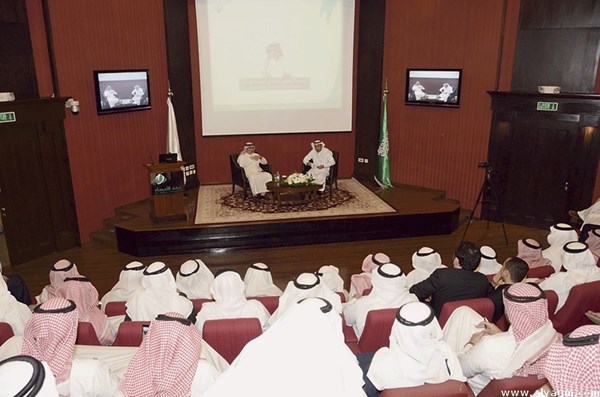
Doctor Al Sulaiman was speaking at the open meeting recently organized by Al-Ahsa Chamber, represented by its Young Businessmen and Young Businesswomen Committees, at its headquarters to shed light on the authority’s future directions and plans under Saudi Vision 2030. He explained that the authority will work to organize and activate the sector so that its contribution to GDP rises from 20% to 35%, noting that SMEs currently make up more than 99% of the enterprises affiliated with the chambers of commerce and industry in the Kingdom.
The Chairman of the Chamber’s Board of Directors, Saleh Al-Afaleq, welcomed the Governor of the authority and the accompanying delegation, thanking him for accepting the invitation to meet the business sector and the people of Al-Ahsa. He emphasized the sector’s role in diversifying sources of income and achieving economic growth, and reviewed the Chamber’s experience, initiatives, and contributions to developing the sector in cooperation with its strategic partners, stressing that there are great and promising opportunities in the region for the young men and women of Al-Ahsa.
During the meeting, Doctor Al Sulaiman explained that, despite the late attention paid to the SME sector in the Kingdom compared with other advanced countries, the state’s new direction under the National Transformation Program and Saudi Vision 2030, which aims to diversify sources of income, confirms the commitment, seriousness, care, and attention given to the major role expected of this sector in supporting the national economy, driving development, diversifying sources of income, expanding the production base, increasing exports, creating new jobs for Saudi youth, and opening new labor markets.
He noted that the authority’s first undertaking was its Board of Directors’ approval of a unified official definition of these enterprises. Under the newly adopted definition, micro enterprises are those with 1 to 5 employees or sales not exceeding SAR 3 million; small enterprises are those with 6 to 49 employees or sales of more than SAR 3 million and less than SAR 50 million; and medium enterprises are those with 50 to 249 employees or sales from SAR 50 million to less than SAR 200 million.
Doctor Al Sulaiman said that the Minister of Commerce and Investment and Chairman of the authority’s Board of Directors, Doctor Majid Al-Qasabi, has tasked him with following up on several files related to the sector, including activating the role and contribution of the commercial sector to GDP, activating the role of the chambers of commerce, expanding the unified service centers, and organizing and activating e-commerce. He pointed out that the Ministry is currently reviewing any regulation that is more than 10 years old, with around 35 regulations currently under review at the Ministry, noting that some regulations are more than three decades old and have never been reviewed, developed, or updated.
He added that the drafts of the Bankruptcy Law and the Franchise Law are now being evaluated by the chambers of commerce and the legal departments of large companies, ahead of their referral to the Bureau of Experts to complete the stages of their approval and adoption soon. He explained that the authority is currently working with its partners to remove the obstacles that limit the sector’s growth, re-engineer the sector’s procedures, identify the gaps in the regulations, address slow, complex, and overlapping procedures, shorten time frames, and expand work in the fields of e-government and unified service centers.
Al Sulaiman identified four main obstacles facing the sector’s enterprises: bureaucracy, financing, difficulty in accessing markets, and competition to attract talent and human capabilities. He noted that bank loans are not suitable for financing enterprises in this sector and that capital financing is the best option for them, adding that many files will be studied and referred to the relevant entities to support and stimulate investment opportunities for SMEs and the finance and business sector.
Doctor Al Sulaiman expressed optimism about the sector’s future in view of what other countries have achieved, noting that entrepreneurship will become the best option for job seekers in the coming period. He pointed out that SMEs absorb 67% of the workforce in the European Union, with the rate reaching more than 88% in other countries such as Chile and South Korea. He added that the authority will work to encourage the spread of the culture of entrepreneurship from the early stages of primary and university education, and will also work to motivate large companies and entities to support the sector in an integrated way that benefits everyone, through business incubators and accelerators.
He noted that the authority regards failure as an essential part of successful entrepreneurial experiences and a good way to learn on the road to success and excellence. He pointed to the authority’s intention to open five offices in the Kingdom’s main regions and to organize the largest professional franchise event in the Middle East in February 2018, stressing that there are great opportunities for improvement, which means a qualitative leap in this sector is possible, and emphasizing that the true wealth of peoples and nations lies in their youth.
Doctor Al Sulaiman stated that the Kingdom has begun pioneering and serious steps to strengthen the sector’s present and future, noting that the existence of sister entities such as the Job Creation and Anti-Unemployment Authority and the Local Content Unit of the Council of Economic and Development Affairs will help accelerate the sector’s growth. He pointed to the enormous opportunities awaiting SMEs, foremost among them programs to privatize state-owned assets valued at around SAR 1.5 trillion, which offers enormous investment opportunities for the Saudi private sector in general and the SME sector in particular.



.svg.png)
Comments
Add comment